
How to Tell If Your Roof Has Storm Damage: A Northern Virginia Homeowner’s Guide
Missing or lifted shingles, granules in the gutters, dented metal and new ceiling stains are the clearest signs. Here's how to check safely after a storm and what to do next.

In this article
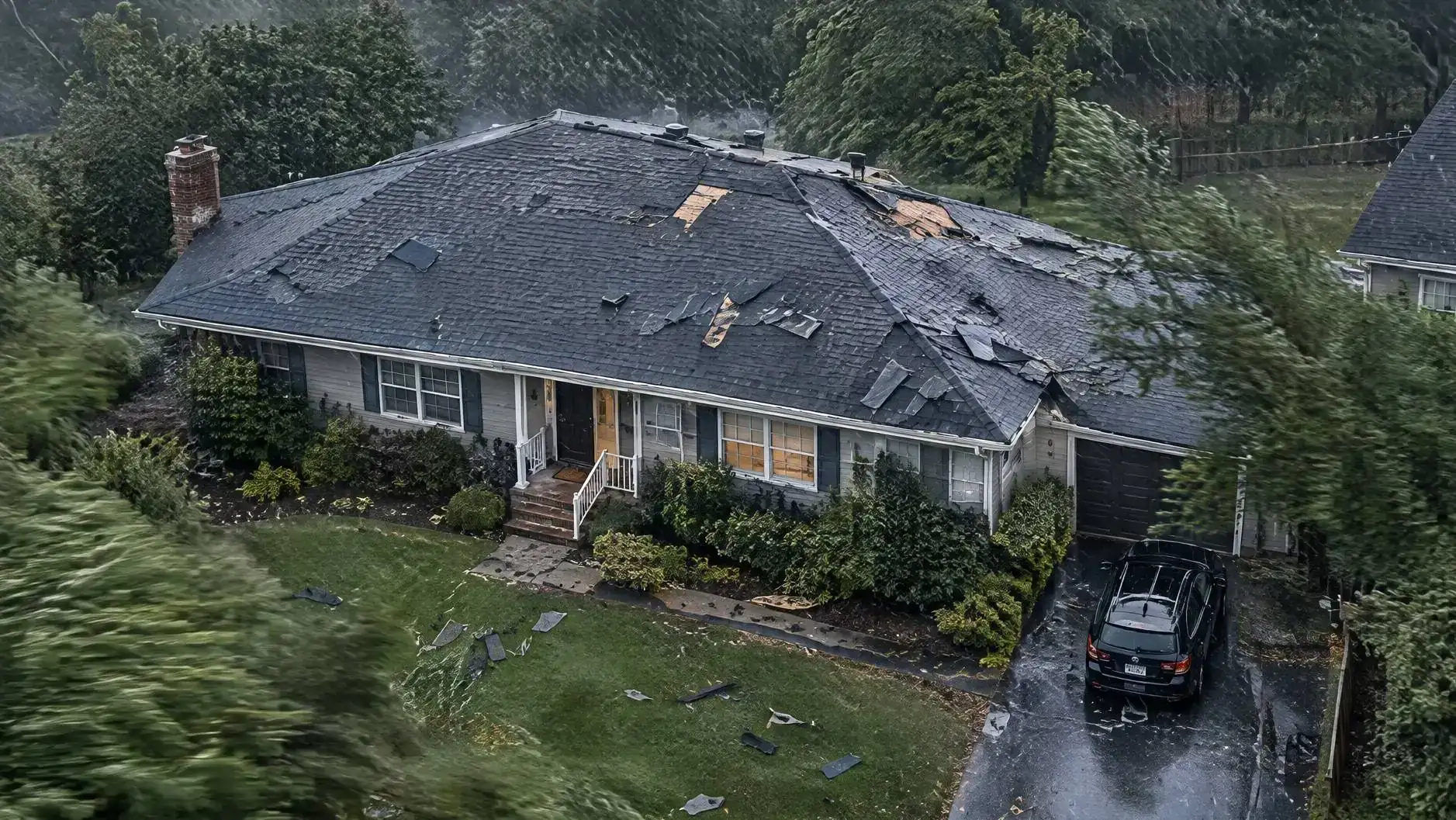
The quickest way to tell if your roof has storm damage is to look for missing or lifted shingles, granules collecting in your gutters and downspouts, dents in gutters, vents or flashing, and new water stains on your ceilings or in the attic. Much of the damage wind and hail cause isn't visible from the ground, so if a storm came through and you see any of these signs, the next step is a free professional inspection. Northern Virginia sees its share of summer thunderstorms, high winds, hail and the occasional tropical remnant, so it's worth knowing what to look for.
This guide walks you through the common types of storm damage, the seven signs to check for, what to do in the first few days after a storm, how insurance usually treats roof damage, and how to decide between a repair and a replacement.
The most common types of roof storm damage in Northern Virginia
Storms damage roofs in a few predictable ways. Knowing which one you're dealing with helps you understand what you're looking at and how serious it might be.
Wind damage
Strong gusts get under the edge of a shingle and lift it. Sometimes the shingle tears off completely and ends up in your yard. More often it lifts, creases along the nail line and settles back down, which breaks the seal strip that holds it flat. A creased or unsealed shingle can look almost normal from the driveway, but the next strong wind can peel it off, and water can get under it in the meantime. Wind also targets the edges of the roof: ridges, rakes and corners take the most force.
Hail damage
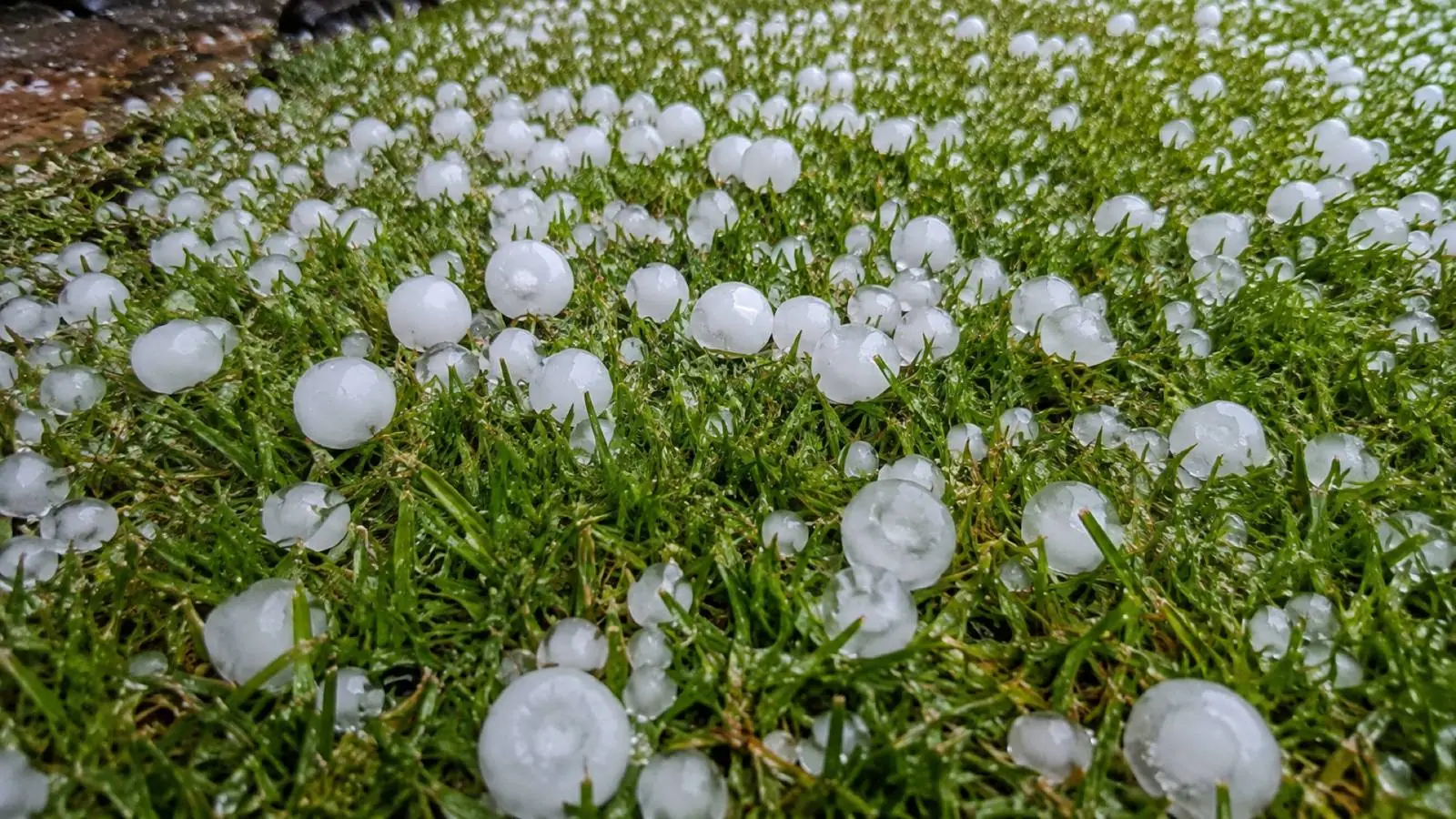
Hail hits asphalt shingles and knocks off the protective granules, leaving dark, bruised spots. On a closer look those spots can feel soft, like a bruise on an apple, because the impact has cracked the mat underneath. Hail also leaves dents on softer metal like gutters, downspouts, vent caps and flashing. Those dents are often the easiest clue to spot from the ground.
Debris and impact damage
Falling branches, whole trees and wind-blown objects can puncture shingles, crack the decking underneath, break gutters and knock flashing loose. Impact damage is usually obvious when it's a big limb. Smaller branches can do quieter damage that only shows up as a leak weeks later.
Water intrusion
Any of the above can let water in. Water is the damage that actually costs homeowners money: wet insulation, stained drywall, rotted decking and, if it sits, mold. That's why even "minor" storm damage deserves a look before the next heavy rain.
7 signs your roof may have storm damage
You can check most of these without a ladder. Stay on the ground and use your phone's zoom if you need a closer look.
- Missing, lifted or creased shingles. Look for gaps, shingles that sit at an angle, or shingles lying in the yard.
- Granules in the gutters and downspouts. A sandy buildup, especially after a hailstorm, means shingles are losing their protective surface.
- Dents in gutters, vents or flashing. Fresh dents on metal parts of the roof are one of the clearest signs of hail.
- Ceiling stains or attic leaks. New brown or yellow spots on ceilings, damp insulation, or drips in the attic point to water getting in.
- Debris on the roof. Branches and limbs can hide punctures or loosened shingles underneath them.
- Damaged or loose fascia and soffit. Wind and falling gutters can pull the trim boards along the roof edge out of place.
- Daylight in the attic. If you see light through the roof boards on a sunny day, there's an opening water can follow.
None of these alone means you need a new roof. They mean it's time to have someone qualified take a closer look.
What to do right after a storm (step by step)
The first few days after a storm matter. Here's the order we recommend.
- Stay safe. Don't climb onto the roof yourself. Wet shingles are slippery, storm-damaged areas can be weak, and falls are a real risk. Stay clear of downed power lines and call your utility if you see one.
- Look from the ground and check the attic. Walk around the house and note anything from the list above. If you can get into the attic safely, look for wet spots, drips or light coming through.
- Photograph everything. Take photos of damaged shingles, dented gutters, fallen branches and any interior stains, with the date. Photos of hail on the ground, next to a coin or ruler for scale, are useful too.
- Prevent more damage if you can do it safely. Move belongings away from leaks and put a bucket under drips. Leave rooftop tarping to a professional.
- Book a free professional inspection. A trained inspector can get on the roof and tell storm damage apart from normal wear. Blue Tower offers free roof inspections with photos you get to keep.
- Call for emergency help if water is coming in. Active leaks need fast attention. See our emergency roofing page or call 571-228-6974.

Does homeowners insurance cover roof storm damage?
Often, yes, when the damage is sudden and accidental, like wind tearing off shingles, hail bruising the surface or a tree limb falling on the roof. Insurance usually does not cover damage from age, wear or lack of maintenance. Every policy is different, so check your policy or ask your agent what yours covers, what your deductible is and how long you have to report damage.
How a roof claim usually works
- You get the roof inspected and the damage documented with photos.
- You report the claim to your insurance company.
- An adjuster inspects the roof for the insurer and decides what's covered.
- If it's approved, the insurer pays for the covered repairs or replacement, minus your deductible.
The documentation is where a lot of claims succeed or fail. Hail and wind damage can be hard to see, and an adjuster can only approve what's clearly shown. That's why it helps to have a contractor who knows what storm damage looks like, photographs it properly and is there when the adjuster comes out.
Blue Tower helps homeowners through the whole process: the inspection, the photo documentation, filing support and meeting your adjuster. You stay in control of your policy, and we make sure the damage is seen. Read more about roof insurance claims.
Will a claim raise my rates?
That depends on your insurer and your policy, so it's a question for your agent. We can't speak for any specific policy.
Repair or replace after storm damage?
Not every storm means a new roof. The right answer depends mostly on two things: how much of the roof is damaged, and how old the roof was before the storm.
When a repair usually makes sense
- The damage is limited to one area or a handful of shingles.
- The roof is relatively young and in good shape everywhere else.
- Replacement shingles can be matched reasonably well.
- The decking underneath is sound.
When a replacement is usually the better call
- Damage is spread across several slopes, which is common with hail.
- The roof was already near the end of its life.
- There are signs of water damage to the decking.
- Your insurer has approved a full replacement.
An honest inspection should tell you which side of that line you're on. If a roof repair will do the job, we'll say so. If it's time for a roof replacement, we'll show you why with photos.
Why it pays to act quickly
Storm damage rarely stays the same size. A lifted shingle lets water in at the next rain. Wet decking softens. A small attic leak becomes a ceiling stain, then wet insulation, then a bigger repair. Insurance policies also have time limits for reporting damage, so waiting can cost you on both fronts.
An inspection after a storm is free with Blue Tower, and you get a straight answer either way. If your roof came through fine, you'll have that in writing. If it didn't, you'll know exactly what you're dealing with.
Schedule a free roof inspection or call 571-228-6974. We serve homeowners across Northern Virginia, from Alexandria and Woodbridge to Stafford and Leesburg.
Frequently asked questions
How long do I have to file a roof insurance claim in Virginia?
It depends on your policy. Most homeowners policies set a time limit for reporting damage, and they vary, so check your policy or ask your agent. Reporting soon after the storm is the safest approach, and an inspection gives you the documentation you need to file.
Can minor hail damage really be a problem?
Yes. Hail can knock granules off shingles and crack the mat underneath without leaving obvious holes. Those bruised spots wear faster and can let water in over time, which shortens the life of the roof. It's often invisible from the ground, which is why an on-roof inspection matters.
Is a roof inspection free?
Yes. Blue Tower's roof inspections are free, with no obligation. You get photos and a clear explanation of what we found. Schedule a free roof inspection.
How soon should I get my roof checked after a storm?
As soon as you reasonably can, ideally within a few days. Getting it checked quickly helps you catch leaks before they spread and gives you documentation while the damage is fresh, which helps with any insurance claim.
Should I get on the roof to check for damage myself?
No. Storm-damaged roofs can be slippery and unstable. Check from the ground and from the attic, take photos, and leave the on-roof inspection to a professional.
What if I can't see any damage but my neighbors are getting new roofs?
Get an inspection anyway. Hail and wind damage is often hard to see from the ground, and homes on the same street usually take the same storm. If your roof is fine, we'll tell you.
Keep reading
Roofing Education
BRAVA vs. Asphalt vs. Metal: Choosing the Right Roof for Your Northern Virginia Home
Roof Replacement & Installation
Roof Replacement Cost in Northern Virginia: What Homeowners Should Expect
Shield your investment.
Protect your home for the long haul.
Roofing, Siding, Gutters, and Peace of Mind.